
On the night of September 8th, 1995, a telephone rang in Gainesville.
As The Covered Dish prepared for a soundcheck, Bill Bryson answered a Georgia lawman who was searching for next of kin. Along Interstate 95 near Midway, Georgia—180 miles, or about two hours and 45 minutes from home—a touring van had blown its rear right tire and rolled three times. Among the debris scattered across the highway were compact discs of Example and Covered Dish flyers. The paper trail led to Bill.
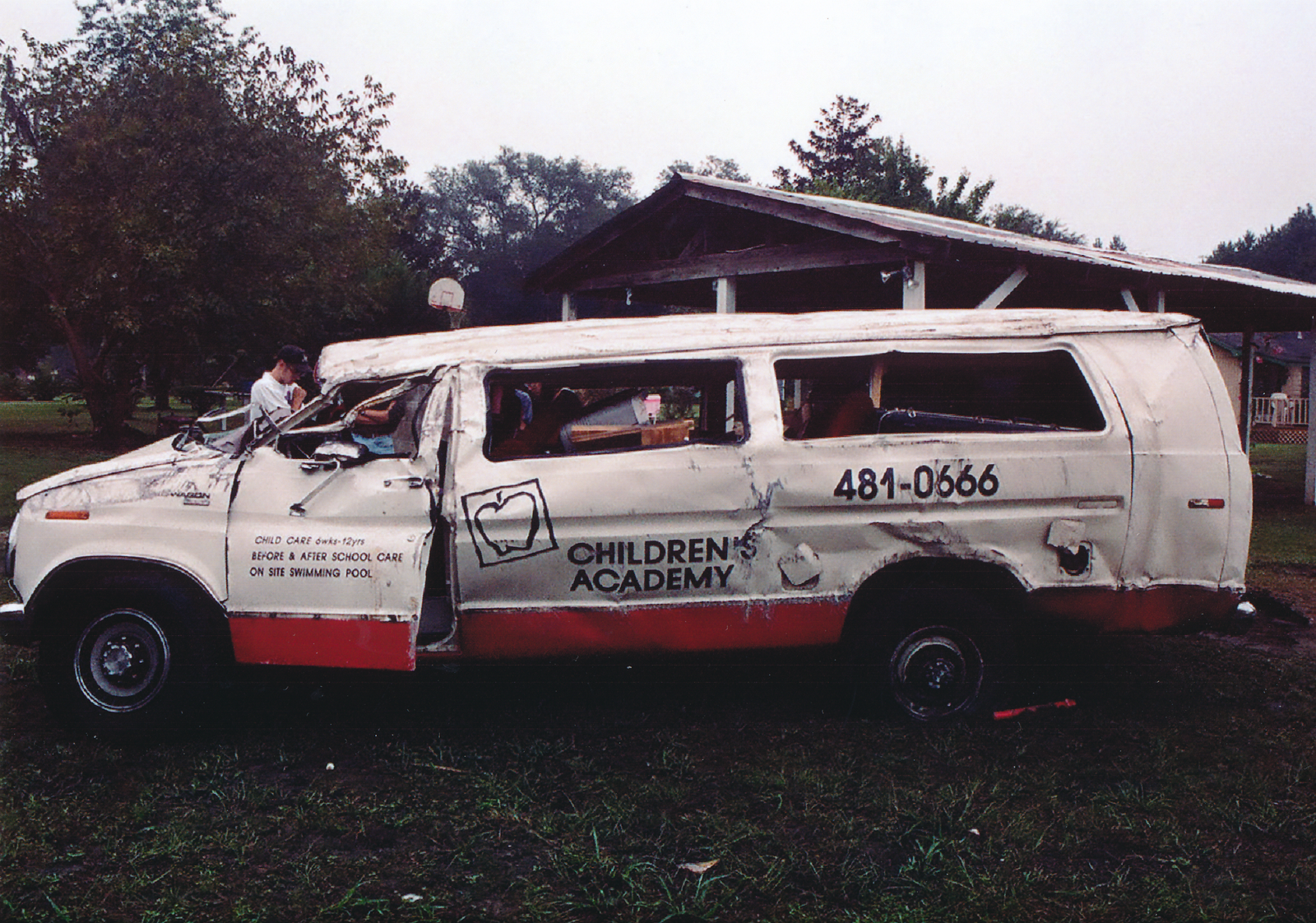
“I remember it like it was yesterday,” Bill said. “It was one of the first major losses of my life. It was a very, very difficult time for everyone, and it still is. I got a call from the sheriff in that county that evening. They were asking for family contact information, so I might have been one of the first people to find out. It hit me like a punch to the gut. I literally dropped to my knees. I couldn’t believe what I was hearing. I spoke to Andy [Bender] shortly afterward because we didn’t really know who had died; we knew only that there had been an accident and fatalities. It took another 24 hours to learn exactly what had happened, who was still with us, and who wasn’t. I just remember those 24 hours feeling like chaos. It was terrible.”
The Dish
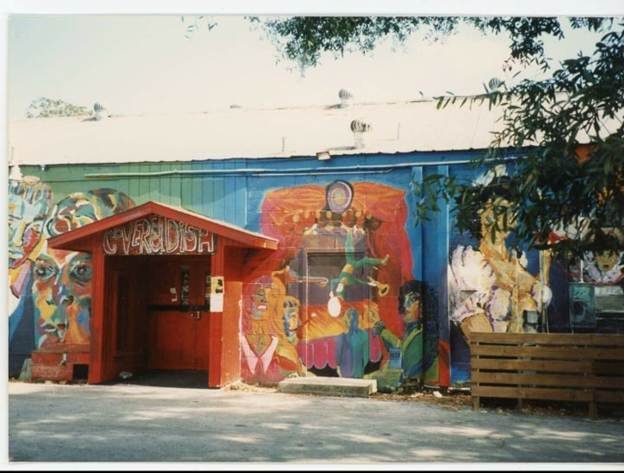
Less than a mile from the edge of the University of Florida campus, at 210 SW 2nd Avenue, The Covered Dish would become For Squirrels’ proving ground.
Bill Bryson, born in Indianapolis, had moved from Chapel Hill, North Carolina, to Gainesville in 1992 and opened The Covered Dish that June. He brought with him the example of Cat’s Cradle, an established music venue and nightclub in Chapel Hill, and a conviction that a rock club was, at heart, a hospitality business.
At the time, Florida was an awkward touring destination for musicians: long drives, uncertain pay, and the belief among agents that the state was not worth the trouble. Bill countered the notion with a simple route—Jacksonville, Gainesville, Tampa, Orlando, Pensacola, Tallahassee—and the promise that a band could cross three Florida markets in three days. Once musicians arrived at The Dish, he fed them, helped them find a place to sleep, paid them honestly, and treated local openers like professionals.
Reputation traveled without social media. Booking agents compared notes; musicians carried stories north to Athens and Atlanta or south toward Tampa and Orlando. Bill mailed monthly postcards, built an early email list, placed notices in the Gainesville Sun and the Florida Alligator, and papered the town with flyers. A band that had been fed, paid fairly, and treated well told another band.
One night with Green Day showed what that reputation meant in practice. “I remember that Green Day had only a $350 guarantee from us. We wound up paying them $1,200,” Bill said. “Tré Cool, their drummer, was the one collecting the payment. At that time, bands were used to being taken advantage of by less-than-honest club owners. But Tré was shocked when I paid him. He told me it was the most they had been paid at that point in their career.” Not long after that performance, Green Day released Dookie on Reprise Records in 1994.
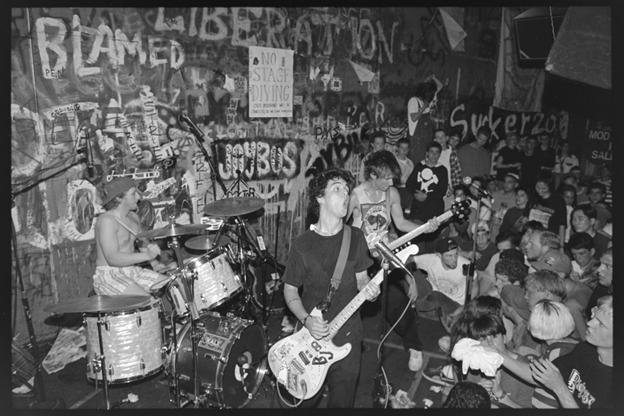
The Dish escaped being labeled as only one kind of place and drew bands whose character became as memorable as their performances.
Another night, while the Texas polka band Brave Combo was onstage, someone slipped behind the cash bar and stole the bank bag holding the club’s fives, ones, and quarters. No one saw the thief. What happened afterward stayed with Bill even longer than the robbery. “They had played our club numerous times and kept coming back because we always had good audiences for them,” Bill recalled of Brave Combo. “It was amazing that nobody saw the thief. But what was even more amazing was that the guys from Brave Combo gave us money out of their pay to make up for what we lost. They weren’t making much—maybe $750 to $1,000 total for five guys—and they gave us a few hundred dollars back. What a gesture. It was really nice.”
The room held roughly 400 people in practice, and from 1992 to February of 2000, it helped shape downtown Gainesville’s alternative and punk culture.
What would become the club’s defining feature had been hidden when it first opened. Bill kept hearing a hollow sound beneath his feet, then found a trapdoor in the stage and discovered the remains of a kidney-shaped, sunken dance floor from the building’s 1980s life as a gay disco called the Spectrum. He uncovered it.
The pit dropped about four feet below the stage and could hold perhaps 150 to 200 people, pressed together beneath a stage that was itself only about a foot above the main floor. From the front, performers and audience were nearly face to face; from the pit, fans looked straight up into the lights, guitars, and sweat. A rail kept people from falling in and doubled as a place for drinks. Touring musicians remembered the room because there was nothing quite like it.
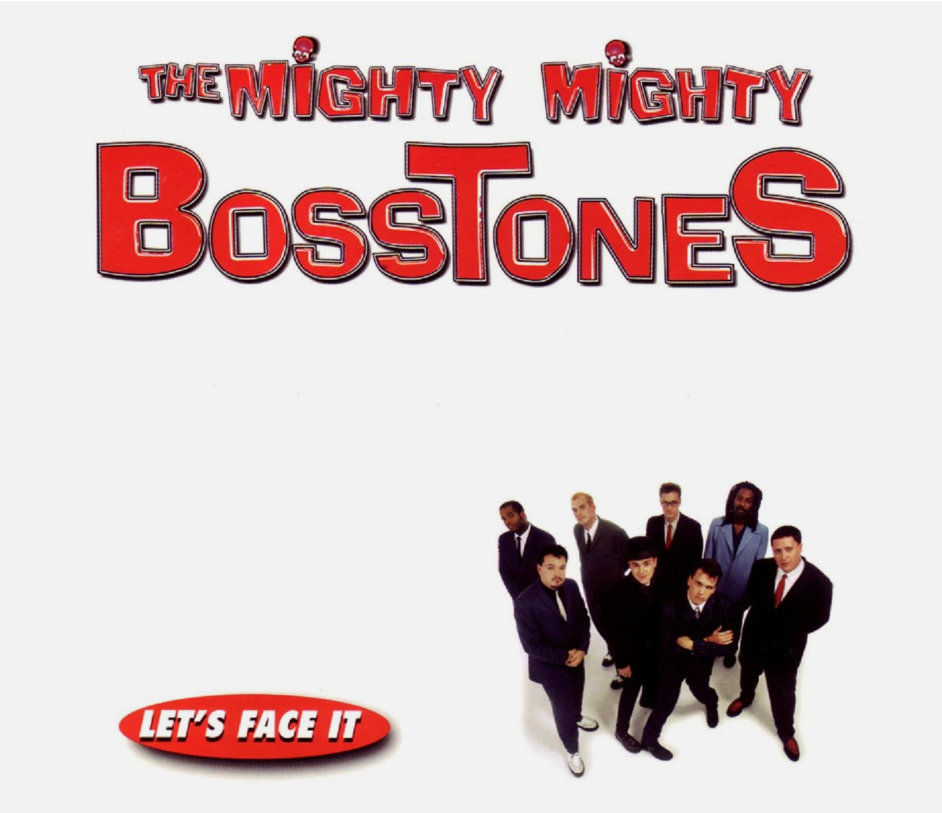
That unusual layout also made stage diving especially dangerous, and The Covered Dish generally prohibited it. The Mighty Mighty Bosstones once threatened, through frontman Dicky Barrett, not to perform unless the club relaxed the rule. “I was like, ‘Well, then don’t play,’” Bill said. The standoff ended with a compromise: the band could allow stage diving only if it assumed liability in writing. The members signed, and the show went on.
The policy’s logic became terrifyingly clear during Green Day’s appearance. A young man launched himself headfirst from the fence around the pit but no one caught him. “I literally had a flash before my eyes,” Bill said. “‘Okay, we have insurance, but I’ll never be able to get it again. This is the end of the club right here.’” Instead, the “swan diver” bounced back up “like a rubber ball.” Bill first pulled him into a bear hug in relief, then held on tightly enough to escort him from the club. Years later, the young man returned to The Dish and thanked Bill for taking care of him that night.
The sound system was another point of pride. Bill credited Pete at Everyman Sound and the engineers he trained for creating a lineage of technicians who could diagnose feedback, calm a nervous band, and make a small room sound much larger than it was. On packed nights, the air conditioning lost the argument with Gainesville heat. Bodies filled the pit, shirts darkened with sweat, and staff passed water through the smoke-filled crowd while the PA drove the songs into every corner.
The Dish stage held ambitious local, regional, and national acts. Green Day, Sublime, and the Dave Matthews Band toured through, but Gainesville itself already carried a formidable lineage—Tom Petty, Bo Diddley, Stephen Stills, Don Felder, and Bernie Leadon—alongside a 1990s field that included Less Than Jake, Sister Hazel, Whoreculture, and Hot Water Music, among others. Bill Bryson made The Dish the center of that rich ecosystem.
The Dish’s identity came from the collision of scenes and the possibility that someone might walk in for one band and leave curious about another world. A college audience drawn downtown by MTV’s 120 Minutes could stand where, on another night, swing dancers or devoted blues fans had filled the floor. Punk one night might give way to reggae, folk, jazz, blues, ska, swing, or African soukous the next.
The Beginning of the Road
The story of For Squirrels had begun with three friends from East Lake High School in Tarpon Springs, Florida. Travis Tooke and Bill White, University of Florida freshmen, bought used guitars at a pawn shop during the second semester and taught themselves to play. Jack Vigliatura joined them after graduating high school in 1991. The friends shared an apartment and made a band mostly to amuse themselves. Soon there were house parties, then audiences large enough to suggest that the joke might contain a future.
“I got to Gainesville in 1992 and opened The Covered Dish. It wasn’t long after that that For Squirrels came into my world both as a band and as friends,” Bill said. Jack Vig, Bill White, and brothers Tim and Andy Bender all held jobs there at one time or another.
At the club, no job was fixed and none were glamorous. Staff set the room before doors opened, checked identification, took tickets and cash, watched for underage drinking, gathered cans and cups during sets, cleaned bathrooms, swept cigarettes and broken glass, and stayed to clean up after the last amplifier went quiet.
Despite the crowded pit and late nights, Bill remembered relatively few fights, and the staff moved quickly when trouble surfaced.
“There actually weren’t a lot of fights, or at least that I remember,” he said. “And when there was a fight, we handled it swiftly. There was one skinhead guy at a show one time that was punching people on the dance floor. We got him out of there.”
On another night, staff caught an underage woman drinking and escorted her from the club. Bill recalled that her eyes were rolling and suspected she may have been under the influence of Roofies, though he could not know for certain. “She kicked me in the shins with her Doc Martens and spat in my face,” he said. “I couldn’t really do anything about it, like retaliate. But after that, I always kept a five-gallon bucket of water handy so I could dump it on somebody like that if that ever happened again. Thankfully it never happened again.”
The most unsettling disruption began with a telephone call. Bill rarely answered the club phone while working, but one night he picked it up and heard a stranger announce that a bomb inside The Covered Dish would detonate in 45 minutes. “I couldn’t believe it,” Bill said. “They hung up, and I was stunned, but I took it seriously. We handed a note to the singer that he had one more song and then we had to clear the club out quietly.” Police arrived with bomb-sniffing dogs and searched the building. After finding nothing, they cleared the room, and the crowd was allowed back inside The Dish.
Jack, Bill, and Tim rotated through the floor and door roles. Tim was often the one who greeted people up front because he combined sharp scrutiny with an easy welcome. Bill Bryson even paid a one-dollar bounty for catching an underage drinker. Jack Vig’s first dollar was stapled behind the bar, a tiny relic of the night he proudly made his first catch.
Though Bill Bryson was the owner, he was only four or five years older than them—a near-peer rather than a distant elder.
Tim, whom Bill says he was closest with, worked at The Dish more than the others, and he and Bill discovered compatible personalities and a shared connection to North Carolina, where Tim had family and Bill had lived before moving to Gainesville. They also talked about the band, and Tim occasionally asked for Bill’s opinion. “I respected him and the role he played with those guys,” Bill said. “He was beloved in our friend group, and I’m glad I got to know him as well as I did. I didn’t know the other guys in quite the same way.”
Like many others, Bill initially thought the band was more of a comic act than a musical force. The name they finally settled on, For Squirrels, reflected the scale of their earliest engagements. “They named their band For Squirrels because they were literally playing for squirrels,” Bill said. “They played pool parties or parties in apartments, things like that. Maybe it didn’t seem that serious at the time as far as a band goes. I just took them at kind of that face value, thinking these are guys who love music, are learning how to play instruments and are playing while they’re in college and it seems like it’s just for fun. And that might be all it ever is. It wasn’t until I got to know them better that I realized how ambitious they were and how they had really committed to this and how they really wanted to make it something to pursue.”
Their early act, which was under a flurry of bizarre names like Fully Gnarlies and Gorby’s Transmission, could look more like vaudeville than rock n’ roll: trivia games, sombreros, sock juggling, pie giveaways, and Jack Vig riding a unicycle across the stage.
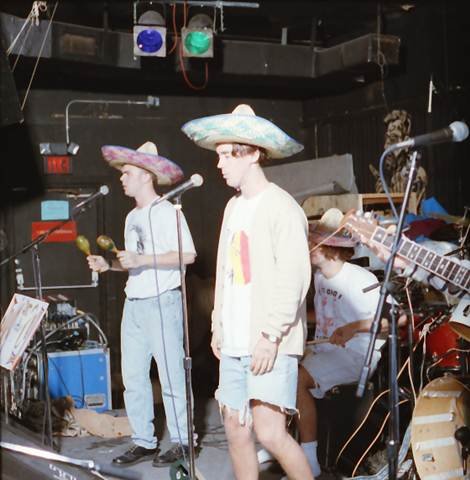
Their playfulness onstage carried into ordinary Gainesville life. Potter Earle, who first met Jack Vig when the two worked together at The Dish, played basketball with him each week. Once, when Jack was locked out of his place, he stayed at Potter’s and spent the night trying to turn him on to Smashing Pumpkins, the Pixies, and other bands.
Potter remembered someone who could be earnest about faith, school, and ambition without surrendering his appetite for jokes. “He had enough wisdom to protect himself, but also had enough lust for life to be generous to people,” Potter said. “Jack just loved life.”
Potter worked at The Dish from about 1993 to 1997 and knew its rhythm from the employee side: the long wait for a crowd, the rush at the door, the quick decisions during a set, and the grimy cleanup afterward. In the slow minutes, the staff kicked around and made one another laugh. Jack fit naturally into that loose camaraderie. He was not yet a figure in a magazine or on MTV; he was the co-worker beside you before doors opened, the friend who might play basketball later, the frontman still close enough to hand you a trash bag.
When Potter met Jack on his first or second shift at The Dish, he learned a lot about him while the two stood outside talking. Potter asked what motivated him. Jack, surprised by the directness of the question, spoke earnestly about his religious background, his band, and the songs they were making. The exchange stripped away any notion that the band was merely a college diversion.
In 1992, the band had rented a garage unit, practiced, rewrote songs, and played anywhere people would listen. That included The Covered Dish, where the band made its debut as For Squirrels in the spring of ’93.
The schedule of The Covered Dish ran on Gainesville time. On an ideal Saturday, an opener started around nine, though the first chord could drift toward ten. The headliner followed around 10:30 or 11, and music might continue until the bar stopped serving at two. The longer an opening band delayed, the shorter its set became. Bill saw punctuality as another form of respect: the night belonged to the headliner, while the opener had the privilege of being introduced to somebody else’s audience.
Bill championed Gainesville’s music scene, especially its local bands. So, what convinced Bill to give For Squirrels a shot as an opening act at The Dish in the spring of ’93?
“It wasn’t really that hard to get a stab at playing The Covered Dish back then,” he said, laughing. “I got to know those guys through their jobs and interactions there, through watching them perform, and through watching them become a band.”
Supporting For Squirrels came naturally because of the friendships he formed with the members and the character they had revealed. “We were trying to support all local music, and For Squirrels was one of those bands at that time. I was eager to help them get that going. Once I saw the potential it made it even more important to help.”
A local group that hustled for its own audience earned more help from the club. For Squirrels understood the bargain instinctively: they handed out their flyers, talked to people, built a mailing list one name at a time, and treated promotion as part of their work rather than something beneath them.
“They were genuine, authentic, and humble,” Bill said. “Starting from scratch as they did, they never took any success for granted. As I watched them improve and succeed over the years, success didn’t change them in any way I noticed, other than giving them more confidence and making them better at what they did. They were so grounded, individually and collectively, that they remained consistent. They never became something they weren’t. It was lovely to see. Not many people, especially when they’re young, respond to success with as much grace and maturity as they did.”
Building Momentum
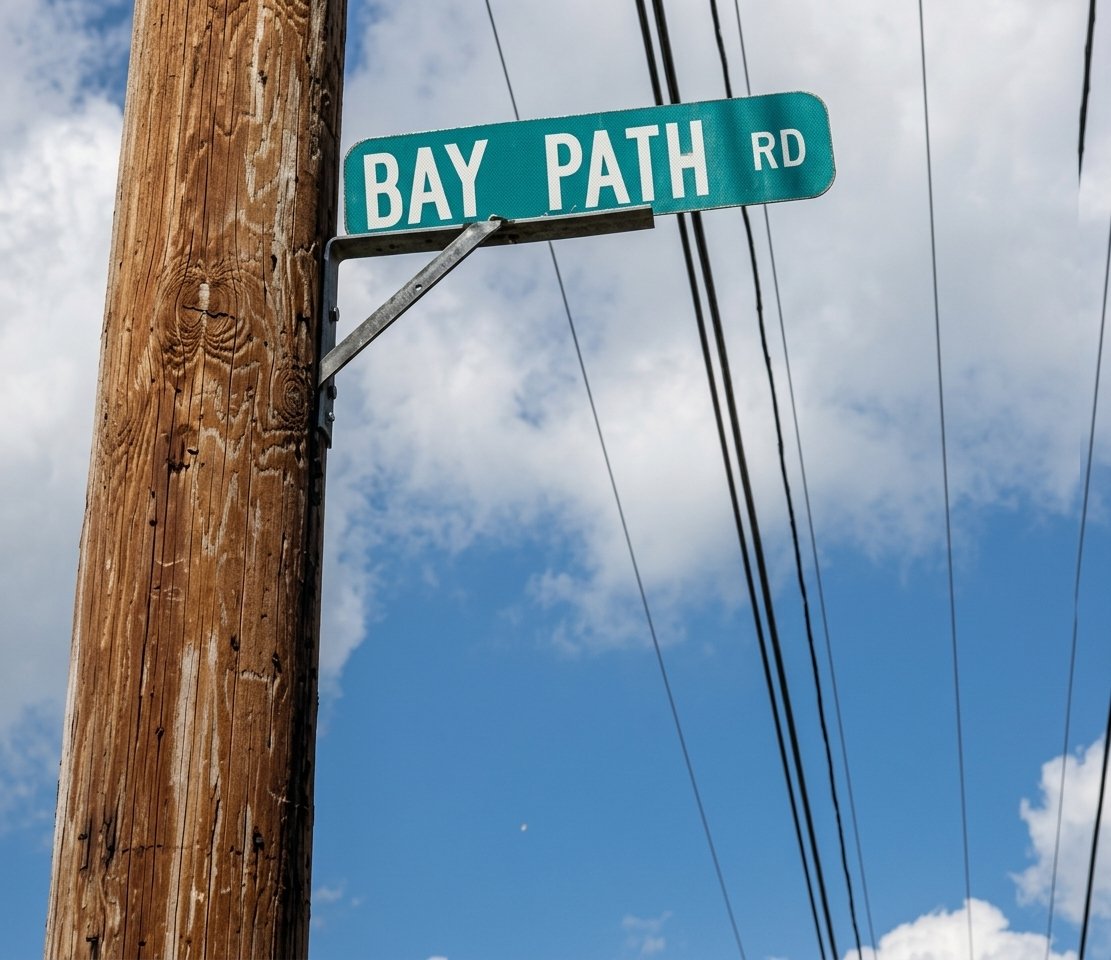
Jack Vig’s return to Spencer, Massachusetts, that summer in search of lyrical inspiration signaled how seriously the group took its work. Their persistence carried them into Mirror Images Studio in Gainesville in late ’93, and their debut album, Baypath Road, arrived January 10th, 1994. The Covered Dish marked the release with a For Squirrels CD party.
“It was exciting to me for a lot of reasons, mainly because I loved them so much,” Bill said. “They were such great people. To see them pursuing their passion like that was something I fully wanted to support, endorse, and help make real for them.”
Jack and his bandmates had used their student loan money to fund the production of that album. Potter wasn’t surprised. Neither was Bill.
“At the time, I thought it was beautiful that Jack would return home to Massachusetts in search of lyrical inspiration,” Bill said of Baypath Road, which was named for the street where Jack grew up in the town of Spencer. “That was when I realized there was much more to what they were doing than simply having fun. This was serious for them. It was art, it was life, and it was special. They were still a very young band, and they wore their emotions on their sleeves. But when they recorded and released Baypath Road, it demonstrated how thoughtful and ambitious they were, and people really started paying attention.”
Personality, perhaps more than anything—even musical ability—is what allowed For Squirrels to settle into the diverse Gainesville music scene quickly and easily.
“It wasn’t long after they first performed at The Covered Dish that they were drawing a large enough audience to warrant headlining their own shows,” Bill said. As the band took the stage more often, a For Squirrels night developed its own pressure system. Their earliest crowds were a core of friends and believers with newer, curious listeners around the edges. In the closeness of the pit, even strangers could feel as if they knew the band.
Much like Green Day and other bands from that era, For Squirrels’ personalities were inseparable from the songs. Their likability helped turn listeners into loyal supporters.
“The rapport all of those guys had was special,” Bill said. “Jack Vig was just a funny guy. He was always just acting out, being funny and entertaining, goofy and weird. Jack and Bill were kind of like a comic team. Bill was kind of his straight man. That was a big part of their show in the beginning was the goofy sense of humor they would get into.”
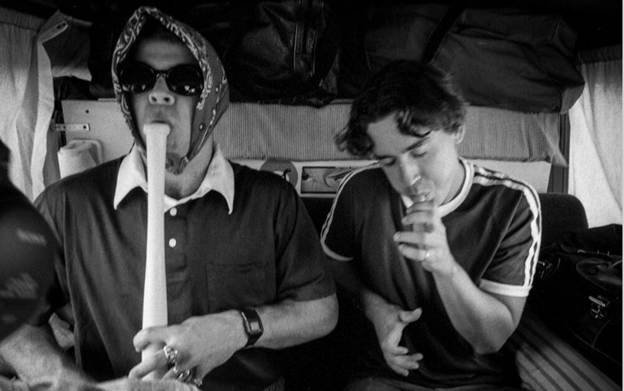
Potter remembered Jack’s lead performance as “this exuberant, funny, kind of crazy performance,” including his rendition of “The Disco.”
Bill watched the group learn how to move a room from explosive peaks to intimate, heartfelt passages, the way a good team changes tempo without losing its chemistry. On at least one night, the commitment became literal when Travis destroyed his guitar at the end of the show—an image far removed from the green players who had first arrived without a settled identity.
“There wasn’t really a typical show at The Dish because we had such a diverse stream of fans coming through, and the audiences were just as varied,” Bill said. “It could be different every night of the week. But when For Squirrels played, there was an air of excitement, especially after they had spent a couple of years getting their show together. The Dish was intimate; as a fan, you could feel close to them and, in For Squirrels’ case, feel like you were growing with them.”
They treated the edge of the stage as a doorway, not a barrier. Bill remembered the connection as something For Squirrels embraced, never an obligation.
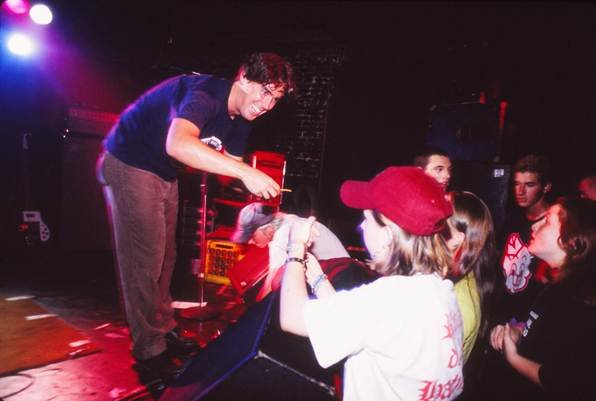
“That really surprised me,” Bill said of seeing For Squirrels interact with the audience before, during and after shows. “They would finish performing and walk right off the stage and into the crowd to shake hands, take pictures and sign autographs. They were always happy to make new friends and talk with whomever wanted to talk with them. I think they were very thoughtful people, and that was evident in their music, their performances, and their personal interactions with me. That was just the type of guys they were.”
The room made that exchange visible. Below the stage, faces tilted upward from the pit; behind them, people leaned along the rail or found a sightline from the higher floor. A first-timer could arrive skeptical, hear the jokes, then feel the songs gather force. By the end, the same person might be waiting to meet the band. Bill remembered that For Squirrels made converts more often than casualties of taste: curiosity became recognition, then allegiance.
There was no internet machinery to manufacture attention or amplify it. There were magazines, flyers, handshakes, miles, and rooms. “Without the Internet you had to do a lot of legwork yourself,” Bill said. “For Squirrels was sort of more on the mainstream side of alternative, so it made them even more accessible to people. There was edge to them and there was power because they were a powerful rock band, but there was also an intimacy and sweetness to their music that people loved.” The CMJ appearance, he said, represented the era’s measure of arrival.
“Over the three or so years they played at The Dish, they performed out of town more often and began touring. They gained confidence, became more seasoned as a band, wrote more songs, and developed their own musical identity,” Bill said.
Tim helped carry the ascent. At The Dish, he had learned to be the first welcoming face at the door and the person who noticed what needed doing before anyone asked. As tour manager, he was the first to arrive and the last to leave. His work ranged from the mechanical details of a performance—making sure guitars were strung and tuned, checking drum hardware, and finding repairs—to anticipating what each musician would need before he asked. Tim mapped the route, knew where the van could park, found food and beds, and spared the band from solving those problems on the fly.
Bill called him “the fifth squirrel” and described his role as the critical, often overlooked element that allowed everything else to move seamlessly. Potter saw the same purpose inside the frenzy: “Tim was just pushing the band forward to success and was doing whatever he had to do.” The work of road manager could be difficult and thankless, but the band never took Tim for granted. They understood his value and treated him as an equal member.
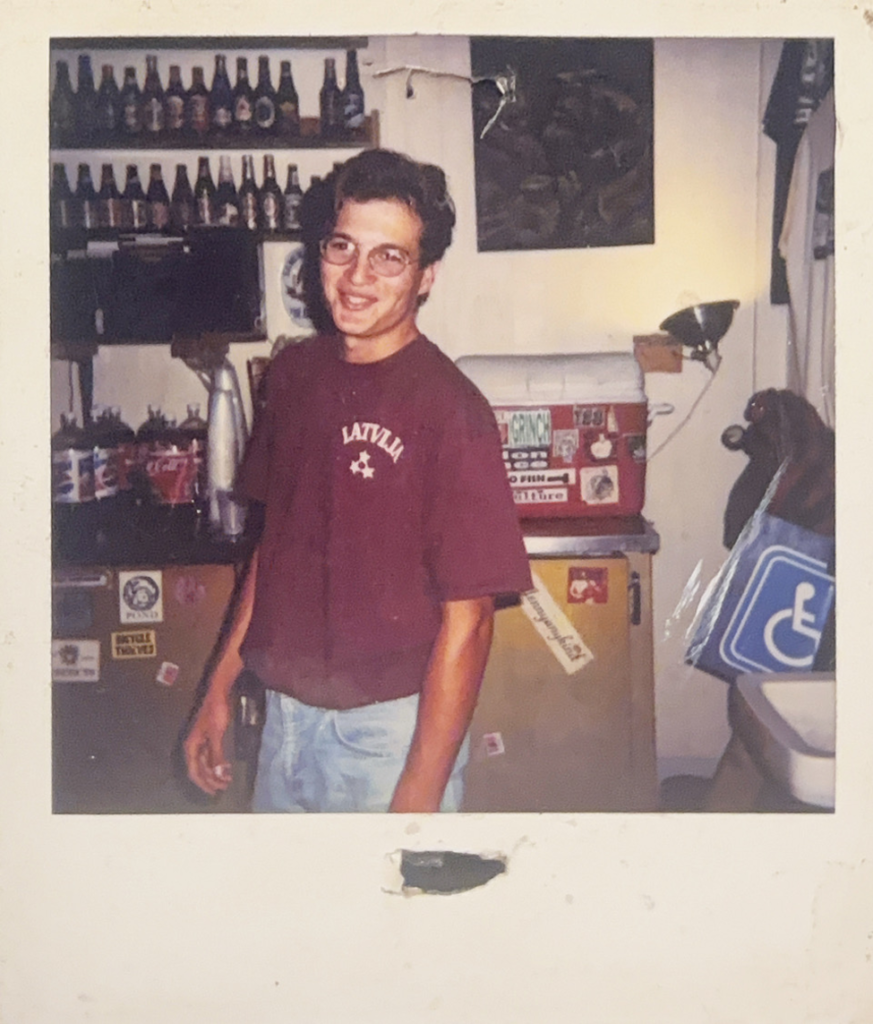
One story captured Tim’s devotion in almost comic terms. When standing water blocked the band’s path into a venue during a rainstorm, Tim carried each member across on his back so their feet would stay dry before the show. The gesture was not a demand from pampered musicians. Tim insisted on it because he wanted them comfortable, focused, and ready to give their best performance.
“That wouldn’t surprise me at all. It’s hilarious. Tim would absolutely do that,” Bill said. “He would literally take the shirt off his back for those guys. I saw him shirtless many nights, doing all the work he had to do in the summer heat.”
As their following grew beyond the house-party circuit, their rapid rise made them a subject of comparison in a scene full of distinct tribes. Bill did not remember Gainesville as openly cutthroat; bands such as For Squirrels, Less Than Jake, and Sister Hazel sounded too different to fight for exactly the same audience.
“Bands might have compared notes about how many people were coming to their shows, but I don’t think there was direct competition,” he said. “Everybody ambitious enough to push ahead was doing it for themselves, not necessarily against others. Still, coming from a background in sports, I think healthy competition can push you to do better than you imagined.”
Potter did remember resentment in some corners—the vague static that gathers when familiar peers begin to move faster than expected. To him, the closest musical parallel was Bloom: the two bands started around the same time and sometimes shared bills, though Bloom initially sounded more commercially ready than the band heard on Baypath Road.
Bill believed that any criticism For Squirrels received for rising so quickly was undeserved.
“There were some naysayers,” Bill recalled. “Some people dismissed For Squirrels for whatever reason. But after a while, you couldn’t deny that their momentum and popularity kept growing—and growing quickly. Maybe it was jealousy. I don’t know. It wasn’t public or written about in any articles. I think For Squirrels were mostly embraced because they were homegrown and UF students. They certainly did nothing to deserve criticism. They were simply working hard, playing their music, and being themselves. Who can criticize that?”
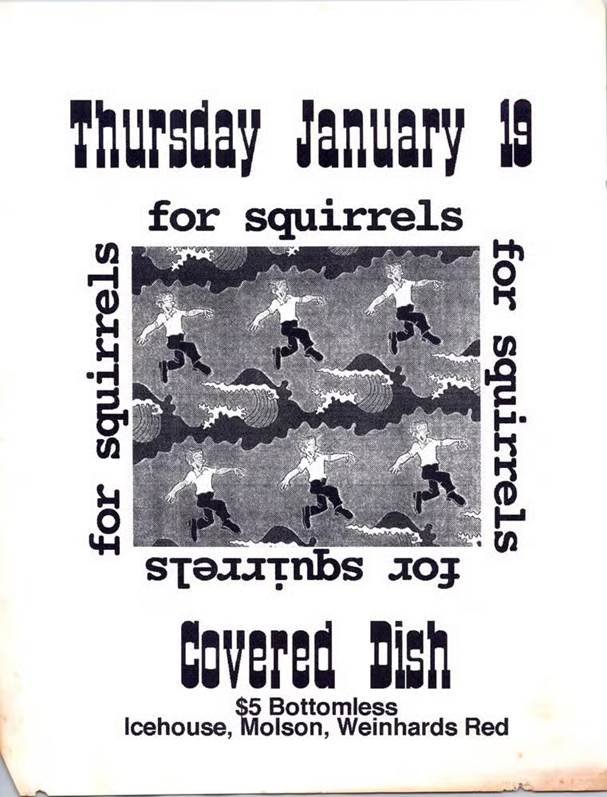
Manager Rich Ulloa entered the picture in 1994 after Baypath Road. Bill knew Rich through the band and was aware of his involvement with Mary Karlzen. “When Rich got involved as a manager, it gave them organized direction and began opening doors,” Bill said. “He deserves the credit alongside the band. He had the vision and helped them begin to realize it.”
Shortly after Rich took the reins, Bill’s support of the band extended beyond The Covered Dish stage. Acting as a curator as well as a club owner, he assembled One Foot in the Grove, a 14-track survey of Florida’s early-1990s indie and alternative scene, and released it on his Put It on a Cracker label. Rich gave Bill “Burnin’ Coals,” which appeared as the compilation’s third track. The placement preserved For Squirrels at a pivotal moment: still rooted in the state’s homegrown circuit, but beginning to move with new purpose under Rich’s management.
Shortly after becoming their band manager, Rich released five remastered tracks from Baypath Road as an EP titled Plymouth. He then sent them on the road, shopped them to labels, and helped turn enthusiasm into an operation. Touring produced a visible leap in performance, songwriting, and command of a crowd.
For Squirrels had already generated considerable local buzz, but Rich’s guidance and promotion helped turn that momentum into national attention. Several record labels expressed interest in the band, including Qwest Records, the American label founded by Quincy Jones. For those who had supported For Squirrels from the beginning, it was an exciting time.
“I remember [American music critic] Jim DeRogatis coming to see them at The Dish when Hugo Burnham was scouting them for [Qwest Records],” Bill said. “It was exciting to see a New York writer and the former drummer of the Gang of Four coming to see them.”
In early 1995, For Squirrels signed with Sony 550. That spring the group recorded the 10-track Example.
“The learning curve was pretty tremendous from Baypath Road to Example,” Bill said. “Those albums are worlds apart, and there weren’t many years in-between them when they happened. I think For Squirrels deserves a lot of admiration for their growth and for the way they sort of evolved as a band.”
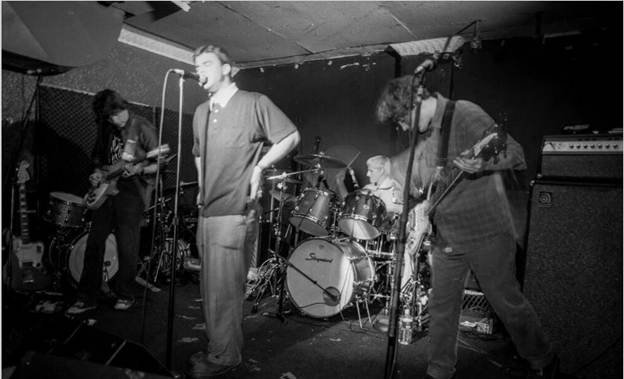
His response to the finished major-label record was immediate: “The production was impressive,” Bill said of Example, which was produced by Nick Launay. “It was just such a grand sort of album compared to Baypath Road. It’s still impressive to me that that band I saw early on could become that. That was pretty special.”
Potter heard that transformation almost as a shock. While the group worked on Example, it had been away from The Dish so often that he did not know the new material. When he put on the CD and reached “8:02 PM,” he heard a band he recognized and yet did not. The distance between the employees and basketball friends he knew and the finished recording made their labor suddenly audible. “I was taken aback by how much they had evolved as a band,” Potter said. “It was obvious to me that they had been working really hard on their craft.”
The Cruelest Turn
“They were really on the cusp when things fell apart,” Bill says.
The timing made the tragedy especially cruel. Their record deal was in place. Example was complete. Their CMJ performance was almost upon them, and Gainesville had already circled September 30th for the hometown release party.
Before the band left town, Jack stopped by The Covered Dish to pick up flyers for the tour. Potter saw him only briefly. “I was likely the last person that saw Jack alive in Gainesville,” he said somberly. Jack carried the paper advertisements out the door, ordinary objects for a future everyone expected to arrive.
Only later would those flyers become evidence on the highway and a route back to Bill’s telephone. Their last errand at The Dish had been to advertise a celebration. By September 30th the same handbills had become artifacts of the life the band was supposed to return to.
In Midway, the rear right tire on their tour van failed. It flipped three times. The lives inside it divided in seconds into the lost and the surviving. In the days following the accident, Gainesville began to learn which names belonged in which column. The dead were Jack Vigliatura, Bill White, and Tim Bender. Travis Tooke and Jack Griego survived with serious injuries.
Only the previous night, For Squirrels had closed its tour at New York’s CBGB during the CMJ Music Festival. The band was coming home at the precise moment its future appeared to be opening.
“It really punched the town in the gut,” Bill said. “Regardless of whether you knew them or cared about their music, the fact that they were young guys from Gainesville doing their thing and had it taken away from them—that was something everyone could relate to, at least within the music scene. Everybody spent time on the road touring, so that could happen to anybody.”
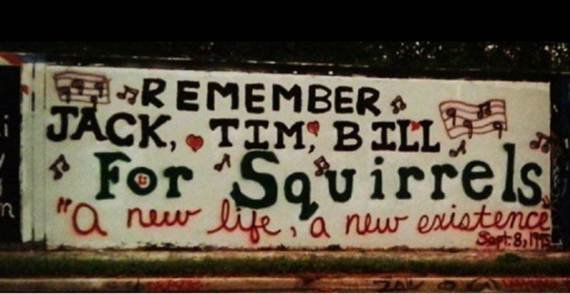
A week later, Jack and Bill were buried side by side at Sylvan Abbey Memorial Park after services in Palm Harbor on September 13th, 1995. Potter attended their funerals while Bill traveled to Cary, North Carolina, for Tim’s service.
In Palm Harbor, amid an unbroken stream of condolences, Potter overheard someone ask Travis if he wanted to go surfing. The ordinary invitation seemed startlingly out of place—until Potter heard Travis’ response. “I remember Travis saying that he appreciated the invitation more than anything anybody had said to him there because he was sick of the hugs and of people saying how sorry they were,” Potter said. “He didn’t want to hear it anymore. It was almost as if he appreciated that one moment of normalcy in a terribly sad situation.”
Afterward, Jack’s widow, Kim, reached out to Potter because Jack had always referred to him as a “good friend.” They met for lunch at a Perkins. For Potter, the invitation revealed that the friendship he had experienced in everyday fragments—work shifts, basketball games, late-night music recommendations—had mattered just as deeply to Jack.
September 30th at The Covered Dish remained reserved for the hometown unveiling of Example, ahead of its October 3rd public release. What should have been a triumphant homecoming became a night of grief and remembrance. “We had T-shirts made for it and played the album and showed some video of the band performing,” Bill said. “I just remember it being really sad. It was emotional for everybody there. There was a big crowd. I think the feeling going through everybody that night was, ‘This is so sad. Why did it have to happen?’”
Under the Rose
Travis and Jack Griego tried to continue. Travis remained on guitar and assumed lead vocals. Jack Griego stayed on drums. Their former high-school soccer teammates and friends Andy Lord, on bass, and Mike Amish, on piano and guitar, joined them. In 1996, the musicians changed the name to Subrosa, “under the rose,” suggesting secrecy or confidentiality, a private oath. Continuing under the old name felt like “walking on the bones of your friends,” Travis was quoted as saying.
Subrosa’s Sony 550 debut, Never Bet the Devil Your Head, followed in 1997. The name had changed, and so had the sound. For Squirrels blended melodic alternative rock with a distinctly Southern, kudzu-covered character—youthful, whimsical, and innocent, with R.E.M.-esque vocals and fuzz-laden guitars. Subrosa was punkier, louder, heavier, and darker, its shifting tone reflecting the surviving members’ grief and anger.
“It was such a different band than For Squirrels,” Bill said of Subrosa. “To come out of that tragedy, I think it was going to be a hard thing to do, period. That was such a tough beginning for a band like that. They were so young and still fairly new to everything. It was an immense challenge for them on so many levels, from both a business and professional level, as well as a musical and personal level.”
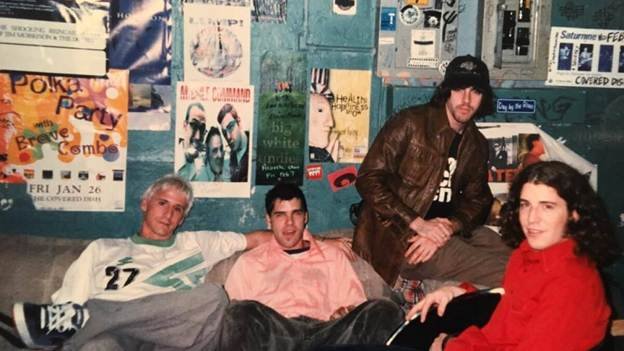
Although Subrosa toured and gained a following while supported by The Covered Dish back home, the band disbanded in 2001. “The sadness and tragedy of For Squirrels bleeding into the story of Subrosa was probably quite a burden on them,” Bill said. Listeners who discovered Subrosa without the backstory may have heard a new band; those who knew For Squirrels heard absence inside every new beginning.
The Road Still Echoes Through Gainesville
Bill believed the music stood on its own, even if his affection for the band deepened his response. “The quality of For Squirrels’ music was such that it was good music whether I was in the picture or not.” From his vantage point—watching bands grow from first shows toward audiences beyond Gainesville—For Squirrels had both the musical promise and the character worth supporting.
Potter offered the companion truth from inside the friendship: closeness made prophecy impossible. “When you have relationships with the people you are just rooting for them,” he said.
In 1998, three years after the accident, Bill returned to his curatorial role with Relaxing the Undertow, a broader compilation designed to showcase the depth of Florida music beyond mainstream radio. Rich supplied him a second For Squirrels recording: “Van Gogh,” cut during the Example sessions but left off the album’s 10-song release. Together with One Foot in the Grove, the two compilations gave “Burnin’ Coals” and “Van Gogh” lives beyond the band’s own records. “That was really special for a lot of reasons, including having put those out to celebrate Gainesville and Florida music,” Bill said.
Bill did much more than operate a club. He published Satellite Magazine, founded the independent record label Put It on a Cracker, and created the Polaroid book All of Us Are Now: Snapshots from a Rock Club after rediscovering a box of images in storage in 2010.
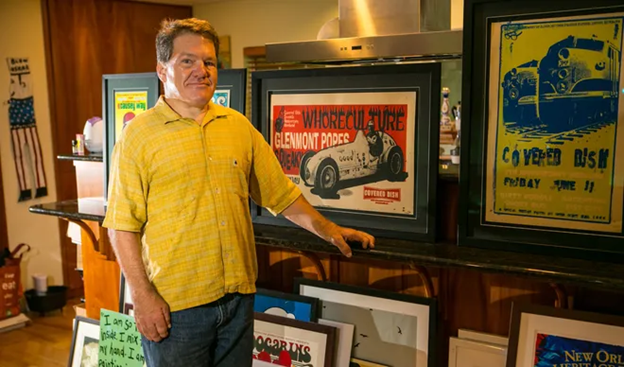
His many accomplishments and contributions to the local scene, from running The Dish to chronicling the music, and his current work in renovating and restoring the historic Florida Theater with plans to reopen it as an active performance venue by 2028, have led many to consider him the “musical godfather” of Gainesville.
But the pace that had sustained the venue had also taken its toll on the host that made it work. “I think a lot of it was burnout,” Bill said of parting ways with The Covered Dish. “It was a grind to run it and I was ready for something new in my life. But it was a pretty full eight years.” Later the address became Common Grounds, Double Down Live, and High Dive.
Bill often imagines an alternate Gainesville in which the band’s interrupted path continued. He also believes that today’s music landscape, with fewer barriers between artists and listeners, might have made a band like For Squirrels even bigger. “Nothing is ever a given, but For Squirrels was a lot like R.E.M. in my mind because they had a passion for the town they lived in,” Bill said. “I’d like to believe that, had they continued on the path they were following before the tragedy, they would have kept that allegiance to Gainesville. The city might have become a different place in many ways, much as R.E.M. helped shape Athens, Georgia.”
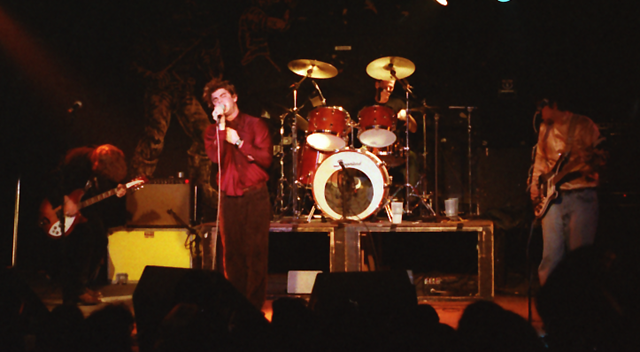
Gainesville remains fertile musical ground, Bill said, though nothing at For Squirrels’ level has emerged there in a long time.
“I often think about the alternative history Gainesville might have had if they had been able to continue on their original path,” Bill said. “It made me appreciate the preciousness of what they did and could have achieved. Opportunities like that are rare, and dedication, hard work, talent, and ambition are not always enough. To see them come so close to capitalizing on everything they had worked for, only to have it end the way it did, was brutal.”
Still, Bill found inspiration in what they had achieved. “At the same time, it is so inspiring to have seen what they did accomplish and should be inspiring to aspiring bands in Gainesville now. I’m glad this story is getting told.”
The music remains difficult for Bill to revisit. Some days he can listen; other days the songs collapse the distance between then and now too quickly.
“I tend to reflect on grief as a component of love. So, the more you’re grieving someone, it’s just a reflection of how much love you had for them,” Bill said when describing how difficult it is to listen to For Squirrels over 30 years later. “There’s some consolation in that, but it doesn’t make it any easier sometimes. But if you open yourself up to it, it’s worthwhile.”
In the end, their measure is not a chart position, an unrealized tour, or the city they might have helped build. “There’s a lot to learn from them,” Bill said of For Squirrels. “It’s an old story, but I think it’s still true. It’s about following your heart, pursuing your passion, and giving it everything you’ve got. They’re a classic example of that. It’s terrible how it ended, but they lived true to themselves and as joyfully as possible. I think that resonates not just in music, but throughout life. They treated people well. Their faith was important to them, but they didn’t wear it on their sleeves. It was part of who they were and of their character. All those things came through in how they treated people and lived their lives. It wasn’t about judging others. It was about building character and values. That should be their legacy.”
That is the central tension in the story of For Squirrels: a band named for an audience that barely existed became deeply connected to a city and homegrown scene just as the wider world began to listen. On the road home, its future scattered across an interstate in discs and flyers. Yet Baypath Road, Example, and the memories of The Covered Dish preserved more than the catastrophe. They preserved the sound of young friends becoming serious—and the proof that the journey had already mattered before it ended.
The For Squirrels Project was made possible through the generosity of countless individuals who shared their memories, experiences, and stories about For Squirrels and Subrosa. This project is dedicated to the bands we loved, the music that continues to inspire us, and the fans whose passion has kept their legacy alive.
Project by: Chris Shortt and Jim Flynn
Collection of articles written by: Jim Flynn
Collection of articles edited by: Connor Schwake
Photography: Tim Bender, the Bender family, Lance Mercer and friends of the bands
Website courtesy of: Rich Booth
© 2026 ForSquirrelsProject.com. All Rights Reserved. Material on this website is protected by copyright law. You may download or print articles for personal, non-commercial use only.
Love reading Bill’s comprehensive story. The Squirrels certainly changed the life of our family. Recently I had the opportunity to share with the young lady who gives tours at the historic Oakwood Cemetery in Raleigh. I chuckled at her calling Tim the “Youngest Celebrity ” on the tour!
Thank you Bill, for a great history of the CoveredDish and the music scene in Gainesville.